
How to File a Mercer County Public Records Request
OPRA lets anyone ask a public agency for its government records. Mercer County supports OPRA requests through an online portal and a request form. The request goes to the records custodian, who must respond within the time the law allows. You do not have to explain why you want a record, though clear detail helps the custodian find it. The county uses an online public-records portal that tracks each request from start to finish.
The county portal for non-court records is a NextRequest system.
You can submit through the Mercer County NextRequest public records portal.
The portal lets you file a request, track its status, and receive records electronically. The steps below outline the general OPRA process for a county agency record.
- Identify the agency that holds the record, such as the County Clerk or Corrections.
- Describe the records clearly, with dates, department, and document type.
- Submit through the county portal or the OPRA request form.
- Choose a delivery method, such as email, pickup, or mail.
- Wait for the custodian's response within the statutory deadline.
OPRA vs Court Rule 1:38
The single most useful thing to understand is the split between OPRA and court rules. OPRA, found at N.J.S.A. 47:1A-1 and following, applies to government records held by public agencies, including many county offices. Court records held by the Judiciary follow Rule 1:38 and the New Jersey Courts records request process instead. A Mercer researcher should not file a county OPRA request for a Superior Court case file, because the Judiciary holds it under different rules.
So use OPRA for county administrative records, Sheriff and Corrections administrative records, and County Clerk records. Use the Judiciary process for court case files. Sending a request to the wrong system slows everything down, since the receiving office cannot grant what it does not hold. The official statute text is published by the state.
You can read the official OPRA text, N.J.S.A. 47:1A-1 et seq. for the full law.
What the County Clerk Maintains
Beyond court files, the Mercer County Clerk keeps a large set of public records. The Clerk records documents affecting real property, such as deeds and mortgages, going back to the county's start in 1838. The office also registers trade names, accepts passport applications, issues county and veteran IDs, swears in notaries, and handles election functions. A public records room lets researchers and title searchers view property history, though staff cannot run a title search for you.
These records are searchable through the Clerk's official land-records portal and are detailed on the Mercer County Clerk page. For land records, the Clerk is the right office, while court case files remain with the Judiciary.
Other county offices hold their own records too. The Sheriff and the Department of Corrections keep administrative records that can fall under OPRA, subject to law-enforcement exemptions. County budgets, meeting minutes, contracts, and similar administrative documents are also government records. So a Mercer public records request is not limited to the Clerk; it depends entirely on which office created or holds the record you want. Identifying that office first is the single most useful step, because OPRA requests go to the records custodian for that specific agency.
Mercer County OPRA Request Form Fields
The county OPRA request form collects contact details and a clear description of the records sought. OPRA allows anonymous requests, but contact information helps with delivery and any clarification. The table lists the common fields on the form.
| Field Label | Type | Required | Notes / Format |
|---|---|---|---|
| Requestor Name | Text | Optional | OPRA permits anonymous requests. |
| Mailing Address | Text | For mail delivery | Street, city, state, ZIP. |
| Text | For email delivery | Electronic response address. | |
| Preferred Delivery | Checkbox | Optional | Pickup, email, fax, or mail. |
| Records Requested | Multiline text | Yes | Describe records with dates, department, and type. |
| Signature / Date | Signature | If not anonymous | Request certification. |
The county form notes that requests for records filed in Superior Court should be directed to the court clerk, which is an important routing reminder. A precise request gets a faster answer. Vague wording, such as asking for everything about a topic, is harder for a custodian to fill and can lead to a request for clarification. Naming the department, the date range, and the document type narrows the search and reduces any special service charge. If you are not sure a record exists, it is fine to describe what you are looking for and let the custodian identify the closest match.
Public Records Fees and Timelines
Copy fees depend on the office and the record. The County Clerk charges per page for deed copies, with a lower rate for in-office copies than for written requests. The Judiciary sets its own court-record copy fees. OPRA also allows a special service charge when a request takes extraordinary effort. The table shows documented copy fees across the relevant offices.
| Item | Fee |
|---|---|
| County Clerk in-office deed copy | $0.10 per page |
| County Clerk written-request deed copy | $2.00 per page |
| Court plain letter-size page | $0.05 per page |
| Court plain legal-size page | $0.07 per page |
| Court certified copy | $15 |
Under OPRA, the custodian must grant or deny access within the statutory deadline, and electronic records are generally provided electronically where available.
OPRA Enforcement
If a county agency denies an OPRA request, the law gives you a path to challenge it. A denied requester may file with the Government Records Council or bring a proceeding in Superior Court. The public agency carries the burden of proving the denial was authorized by law. The Government Records Council publishes guidance for both requestors and custodians.
The council's resource for records custodians is the Government Records Council custodian handbook.
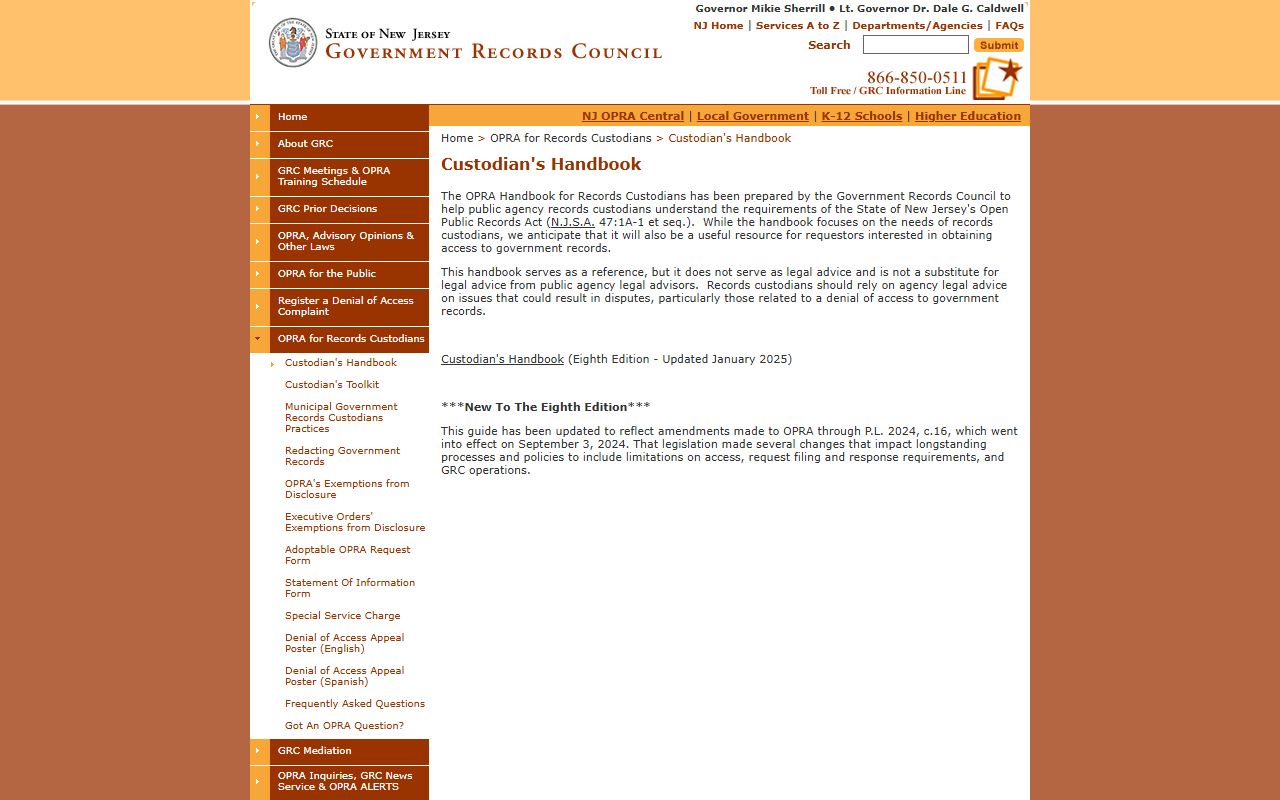
The handbook explains how agencies should process and respond to requests. For a court-record denial, the path is different, because that goes through the Judiciary rather than the Government Records Council.
Confidential Exemptions
OPRA is broad, but it is not unlimited. The law exempts certain records, especially law enforcement investigatory material, ongoing-investigation records, confidential informant and victim information, and security-sensitive items. OPRA is also not a discovery tool for a pending case, and it is not the right path for confidential juvenile, adoption, or mental-health records. Those carry their own protections under statute and court rule. Using OPRA for the wrong purpose usually leads to a denial, since the custodian must follow the exemptions the law sets. When a record is genuinely exempt, no agency can release it through an ordinary request, and the better route may be a court process or a different statutory path.
Note: OPRA does not reach Judiciary court files or restricted juvenile, adoption, and mental-health records; those use separate processes.
Public Defender and Legal Aid Resources
Some public records questions tie into legal representation and aid. Eligible criminal defendants are served by the New Jersey Office of the Public Defender, which represents people charged with indictable offenses and youth in juvenile matters. The office runs a Mercer County location and a statewide presence.
The statewide office is the New Jersey Office of the Public Defender.
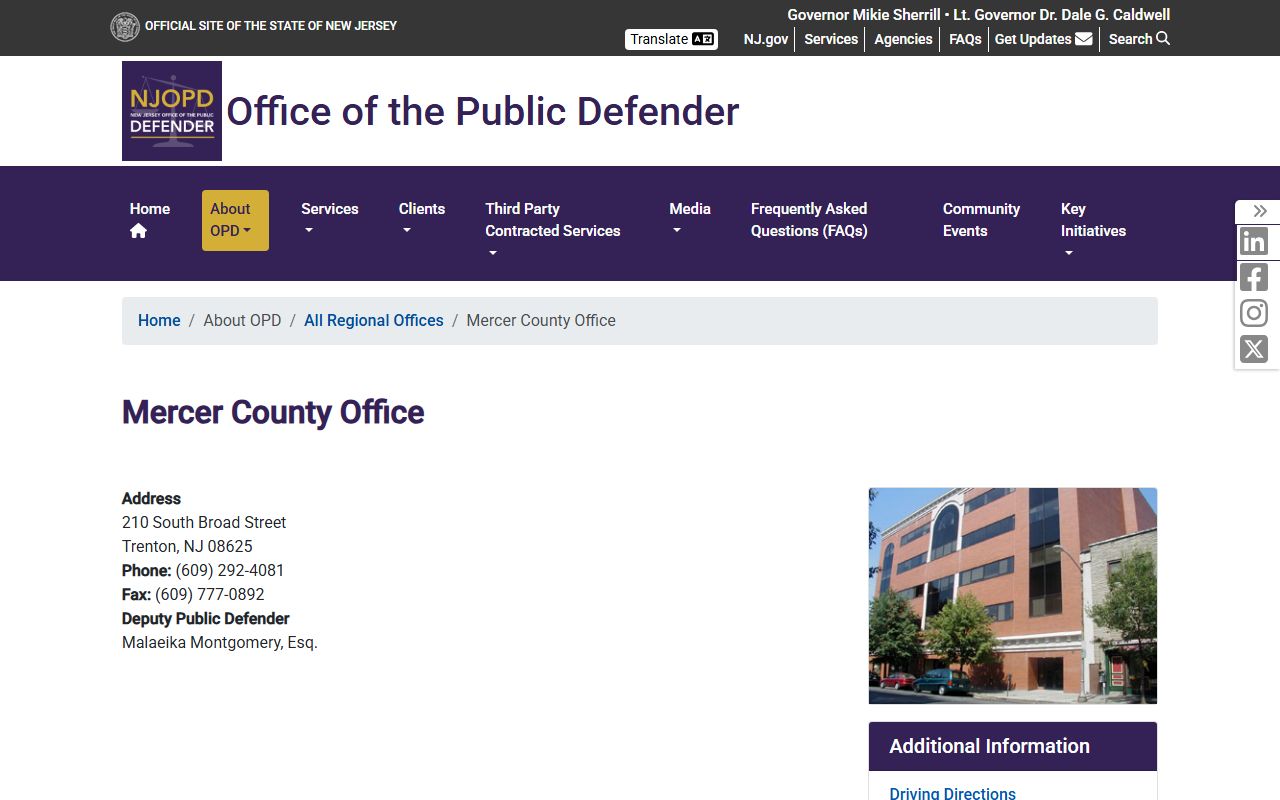
The Mercer regional office serves local clients and lists its address and contact details.
Find it through the NJOPD Mercer County regional office.
For civil legal aid, including housing, benefits, and reentry topics, Legal Services of New Jersey offers self-help articles and a hotline.
The civil legal aid resource is Legal Services of New Jersey.
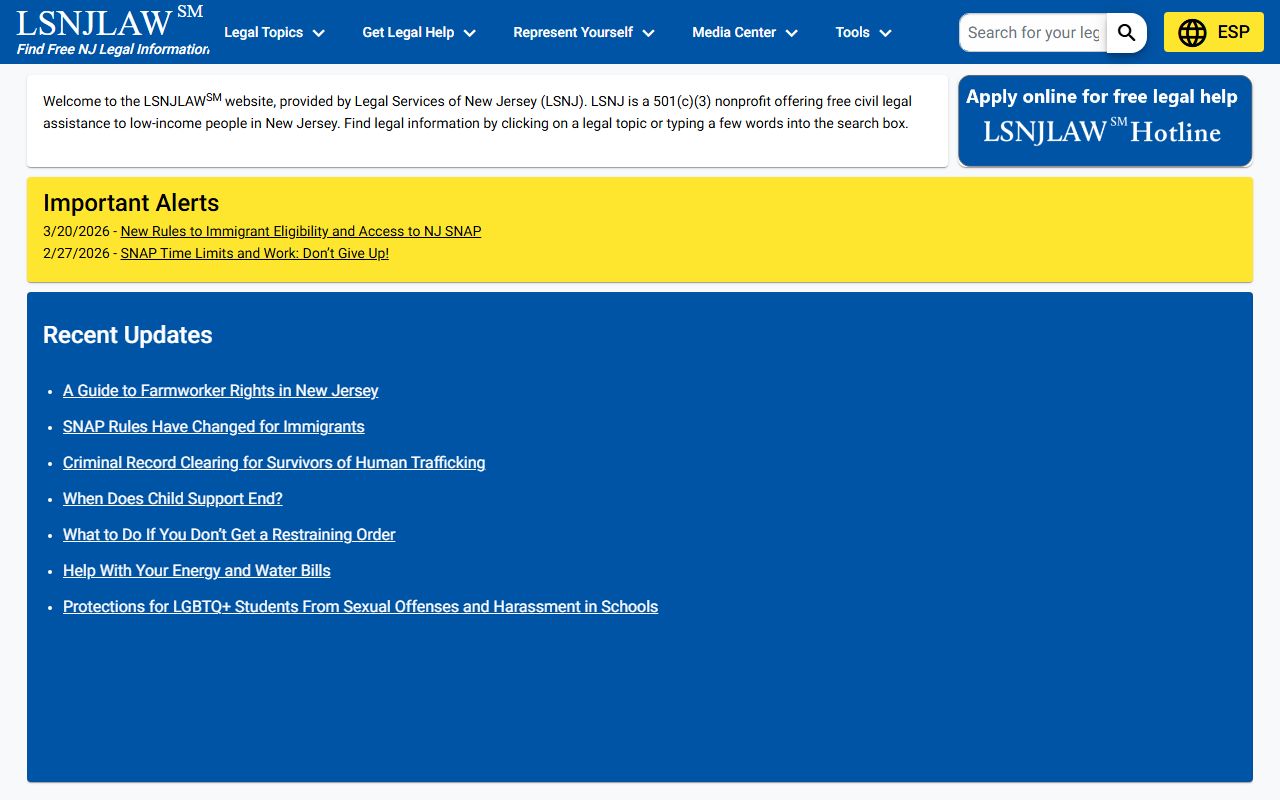
These offices do not replace an OPRA request, but they help people who need legal support alongside records access.
Property Alert and Fraud Monitoring
The County Clerk offers a Property Alert service that watches for documents recorded under a person's name or property. Registrants get an email alert when a matching document is recorded, which helps catch potential fraud early. It is a public-service tool layered on top of the Clerk's recording system, and it is free to register. The Mercer County Clerk page explains how to sign up and how the land-records search works. For a property owner, it is one of the simplest ways to keep an eye on records without filing a request every few months.